
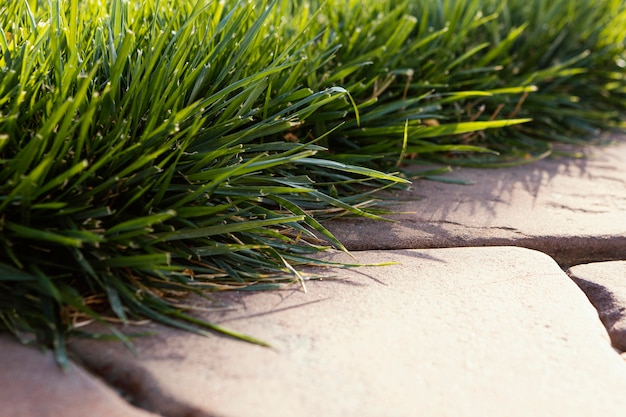
Short or long grass – what is the best choice for your lawn? Many people believe that shorter grass is the way to go, as it looks neater and requires less maintenance. However, research shows that longer grass actually has several benefits for lawn health and sustainability.
Longer grass helps to promote deeper root growth, making the turf more resilient to drought and pests. It also provides a natural habitat for beneficial insects and microorganisms that contribute to soil health. In addition, longer grass can help to prevent soil erosion and reduce water runoff.
While short grass may look tidy, it requires more frequent mowing and fertilizing to maintain its appearance. On the other hand, longer grass is more low-maintenance and can thrive with less water and chemical inputs. So, the next time you’re debating between short and long grass, consider the many benefits that longer grass can bring to your lawn and the environment.
Pros and cons of short grass
Short grass has its own set of advantages and disadvantages that need to be considered when deciding on the length of your lawn.
| Pros | Cons |
|---|---|
| 1. Easy to maintain – short grass requires less mowing and trimming, saving you time and effort. | 1. Requires more frequent watering – short grass tends to dry out faster and requires more frequent watering to stay healthy. |
| 2. Neater appearance – short grass gives your lawn a manicured and tidy look, enhancing the overall aesthetics of your outdoor space. | 2. Prone to weeds – shorter grass can allow weeds to grow more easily, requiring more attention to weed control. |
| 3. Better for some activities – short grass is ideal for activities like sports or outdoor gatherings, providing a more even surface for play. | 3. Less resilient – short grass may be more susceptible to damage from foot traffic and environmental stressors compared to longer grass. |
Pros and cons of long grass
Long grass can provide various benefits to your lawn, but it also comes with some downsides to consider.
- Pros:
- Long grass can help retain moisture in the soil, reducing the need for frequent watering.
- It can provide habitat for beneficial insects and wildlife, contributing to a healthier ecosystem in your yard.
- Long grass can help prevent soil erosion by anchoring roots in the ground.
- It can also act as a natural mulch, helping to suppress weeds and retain soil nutrients.
- Cons:
- Long grass may attract pests like ticks and mosquitoes, increasing the risk of insect-borne diseases.
- It can create hiding spots for unwanted critters like snakes and rodents.
- Long grass can also make your lawn look unkempt and untidy, which may not be visually appealing to everyone.
- If left unattended, long grass can become a fire hazard during dry seasons.
Water consumption: short vs long grass

Short grass requires more frequent watering compared to long grass. This is because shorter grass has shallower root systems, which need to be watered more often to keep the grass hydrated. On the other hand, long grass with deeper root systems can access water stored deeper in the soil, reducing the frequency of watering needed.
Research has shown that long grass can reduce water consumption by up to 50% compared to short grass. This can lead to significant water savings, especially in areas with water restrictions or scarcity.
Conclusion
In conclusion, growing long grass can be more water-efficient compared to short grass. By allowing your grass to grow longer, you can reduce water consumption and promote healthier grass with deeper root systems. Consider letting your grass grow longer to conserve water and promote sustainable landscaping practices.
Nutrient absorption: short vs long grass
When it comes to nutrient absorption, shorter grass has the upper hand over longer grass. Shorter grass blades allow for more sunlight to reach the soil, promoting better photosynthesis and enhancing the plant’s ability to absorb essential nutrients.
Shorter grass also has a more efficient root system, with roots closer to the surface where nutrients are more readily available. This allows the grass to absorb nutrients more effectively and grow healthier and greener.
Weed prevention: short vs long grass
Short grass is generally more effective for preventing weed growth compared to long grass. When grass is kept short, it reduces the amount of sunlight that reaches the soil, making it difficult for weed seeds to germinate and grow. Additionally, short grass allows for better air circulation and dries out the soil faster, which hinders weed growth. On the other hand, long grass provides more shade and moisture, creating a more favorable environment for weeds to thrive.
To effectively prevent weeds, it is recommended to mow your lawn regularly to keep the grass short. Aim to maintain a grass height of around 2-3 inches for most grass types. Avoid cutting the grass too short, as this can stress the grass and create bare patches that weeds can easily invade.
In conclusion, keeping your grass short is a simple yet effective way to prevent weed growth in your lawn. Regular mowing and maintaining the proper grass height can go a long way in keeping your lawn weed-free.
Sunlight exposure: short vs long grass
When it comes to sunlight exposure, short grass tends to thrive in areas with ample sunlight. Short grass has better access to sunlight, allowing for efficient photosynthesis and healthy growth.
On the other hand, long grass can struggle in areas with limited sunlight. Tall blades can create shade, hindering the lower layers of grass from receiving adequate sunlight for optimal growth.
Maintenance requirements: short vs long grass
– Short grass requires more frequent mowing compared to long grass. Aim to mow short grass every 1-2 weeks to maintain its neat appearance.
– Long grass, on the other hand, does not require as frequent mowing. Mow long grass every 3-4 weeks to keep it looking well-maintained.
– Short grass may need more frequent watering and fertilizing to keep it healthy and green. Consider watering short grass 2-3 times per week, especially during hot weather.
– Long grass typically requires less water and fertilizer compared to short grass. Water long grass once a week, and fertilize it once or twice a year to promote growth.
– Short grass can be more prone to weeds and diseases due to its shorter height, requiring more attention and maintenance in terms of weed control and pest management.
– Long grass, with its taller height, can provide a natural barrier against weeds and pests, reducing the need for frequent treatments.
– Overall, the maintenance requirements for short grass are more intensive and frequent compared to long grass. Consider your time, resources, and desired appearance when deciding between short or long grass for your lawn.
Overall health and appearance: short vs long grass
When it comes to the overall health and appearance of your lawn, the length of the grass plays a crucial role. Short grass tends to require more frequent mowing and is more susceptible to weed growth and drying out. On the other hand, long grass can create a lush, healthy lawn that is more resistant to pests and diseases.
Short grass:
- Requires more frequent mowing
- Prone to weed growth
- Dries out faster in hot weather
Long grass:
- Creates a lush and healthy lawn
- Provides better resistance to pests and diseases
- Requires less frequent mowing
In summary, while short grass may provide a manicured look, long grass often results in a healthier and more attractive lawn overall. Consider the specific needs of your lawn and choose the grass length that will best promote its overall health and appearance.
Question-answer:
Does grass grow better when it is kept short or long?
Grass can grow better when it is kept short or long depending on the specific grass species, climate, soil type, and maintenance practices. Some grass species thrive when kept short as it encourages dense growth and prevents weeds from taking over. On the other hand, allowing grass to grow longer can help it develop deeper roots and withstand drought conditions better.
How does mowing height affect the growth of grass?
Mowing height can significantly impact the growth of grass. Cutting grass too short can stress the plants, leading to shallow roots, increased vulnerability to drought, and weed invasion. On the contrary, leaving grass longer allows for stronger root development, better moisture retention, and overall healthier growth.
What are the benefits of keeping grass short?
Keeping grass short can promote a neat and tidy appearance, reduce the need for frequent mowing, prevent thatch buildup, and discourage certain pests and diseases. Additionally, short grass can be more resilient to heavy foot traffic and provide a more uniform look to the lawn.
Are there any disadvantages to letting grass grow long?
Letting grass grow long may result in a more unkempt look, increased weed growth, and potential shading of the lower grass blades. Long grass can also harbor pests and diseases in the dense foliage, require more frequent mowing to maintain height, and be harder to manage in terms of lawn care.
How can I determine the ideal mowing height for my grass?
The ideal mowing height for your grass will depend on factors such as the grass species, climate, and soil conditions. It is recommended to research the specific requirements of your grass type and adjust the mowing height accordingly. Generally, cool-season grasses like Kentucky bluegrass prefer a height of 2-3 inches, while warm-season grasses like Bermuda grass thrive at 1-2 inches.