
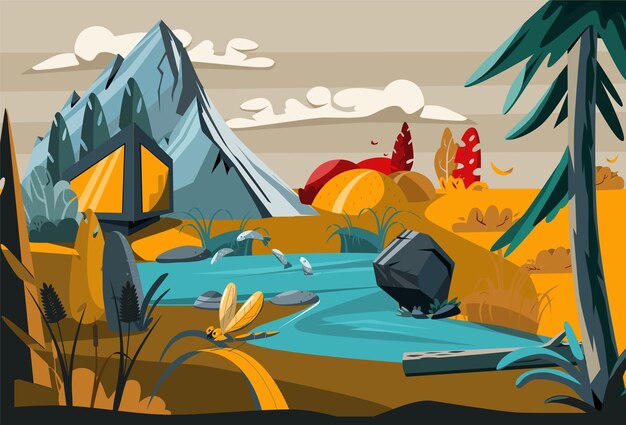
In the realm of creative expression through natural scenery, there are certain crucial aspects that form the foundation of this form of artistic representation. These fundamental components are the building blocks which allow artists to capture the beauty and essence of the world around them.
From the use of color and light to the composition and perspective, each element plays a significant role in conveying the emotion and atmosphere of a landscape. The delicate balance between these different aspects is what ultimately creates a harmonious and visually captivating piece of art.
Through a careful examination of the various aspects that constitute the art of depicting natural environments, we can gain a deeper appreciation for the skill and creativity involved in translating the world around us onto canvas or paper. These essential components are the keys to unlocking the beauty and power of landscape art.
The Importance of Composition in Landscapes
Creating a visually appealing landscape involves more than just capturing the scenery in front of you.composition plays a crucial role in determining how a landscape is perceived and understood by the viewer. It is the arrangement of elements within the frame that can make or break a landscape painting or photograph.
- Composition helps guide the viewer’s eye through the artwork, leading them to focus on specific elements or areas of interest.
- By carefully arranging elements such as foreground, midground, and background, a sense of depth and dimension can be created, adding visual interest and realism to the scene.
- Balance, symmetry, and asymmetry in composition can evoke different emotions and create different moods in a landscape artwork.
- Consideration of lines, shapes, colors, and textures can also greatly impact the overall composition of a landscape, leading to a more dynamic and engaging work of art.
In summary, composition is a fundamental aspect of creating successful landscapes. It is the underlying structure that holds the elements of a landscape together, guiding the viewer’s gaze and creating a harmonious and visually pleasing whole.
The Role of Color in Landscape Art
Color plays a crucial role in the depiction of natural scenery, influencing the mood, atmosphere, and overall impact of a landscape artwork. Artists use a wide range of colors to evoke emotions, convey a sense of place, and capture the essence of the natural world.
The Emotional Impact of Color
Warm colors such as reds, oranges, and yellows are often used to create a sense of energy, passion, and warmth in a landscape painting. In contrast, cool colors like blues, greens, and purples can evoke feelings of calmness, tranquility, and serenity. The choice of color palette can greatly affect how viewers interpret and connect with a landscape artwork on an emotional level.
The Importance of Color Harmony
Creating harmony in a landscape painting involves balancing contrasting colors, tones, and intensities to achieve a cohesive and visually appealing composition. Color harmony can help guide the viewer’s eye through the artwork, creating a sense of unity and balance. By understanding how different colors interact with each other, artists can enhance the richness and depth of their landscapes.
Creating Depth and Perspective in Nature Scenes
When it comes to capturing the true essence of the natural world on canvas, one must master the art of creating depth and perspective in landscapes. This entails using various techniques to convey distance, scale, and dimension in a two-dimensional medium. By understanding how to manipulate space, light, and shadow, artists can transport viewers into the heart of their scenic masterpieces.
Contrast is key in establishing depth in landscape art. By playing with values and intensities, artists can create a sense of distance between foreground and background elements. Lighter tones tend to advance towards the viewer, while darker tones recede into the distance, giving the illusion of depth. Additionally, incorporating overlapping shapes can further enhance the perception of space, as objects that overlap appear closer while those further back are partially obscured.
To convey perspective in a landscape, artists often utilize linear elements such as converging lines, vanishing points, and diminishing scale. By incorporating these visual cues, the artist guides the viewer’s eye deeper into the scene, creating a sense of vastness and distance. Moreover, incorporating atmospheric perspective by subtly adjusting color saturation and sharpness can enhance the illusion of depth, as distant objects appear hazier and less defined.
Mastering the art of creating depth and perspective in landscapes requires a keen eye for detail, a deep understanding of spatial relationships, and a willingness to experiment with different techniques. By skillfully incorporating contrast, overlapping shapes, linear elements, and atmospheric perspective, artists can bring their nature scenes to life, captivating viewers and transporting them into the vast beauty of the natural world.
Utilizing Light and Shadow Effectively
Mastering the play of illumination and darkness is crucial in achieving dynamic and impactful compositions in the world of landscape portrayal.
Influential Texture in Artistic Depictions of Nature

When creators delve into portraying the natural world, the composition of surfaces takes on a pivotal role in conveying various nuances and dimensions of the scene. Texture plays a significant part in enhancing the visual appeal and tactile qualities of the landscape, adding depth and character to the overall representation.
Exploring Different Textures in Landscapes

From the rugged roughness of rocky terrain to the softness of velvety foliage, artists use a diverse range of textures to capture the essence of nature in their works. By manipulating brushstrokes, applying different mediums, and experimenting with techniques, they are able to convey a multitude of textures that evoke a sensory experience for the viewer.
| Texture Type | Description |
|---|---|
| Smooth | Creates a serene and calming effect, often seen in tranquil water scenes or vast open skies. |
| Coarse | Imparts a sense of ruggedness and rawness, commonly found in depictions of rocky mountains and untamed landscapes. |
| Lush | Conveys a lush and vibrant quality, typical in depictions of lush forests and dense foliage. |
| Weathered | Elicits a feeling of age and history, often used in portraying ancient ruins or weathered structures. |
Capturing Mood and Emotion in Landscapes
When creating visual representations of natural scenery, it is essential to go beyond simply replicating the physical aspects of the environment. Artists must strive to evoke a sense of atmosphere, emotion, and feeling in their landscape compositions. This requires a deep understanding of the interconnected relationship between colors, lighting, composition, and subject matter.
Incorporating Elements of Mood and Emotion
To capture the essence of a landscape and convey a specific mood or emotion, artists often use a combination of techniques. This may involve manipulating color palettes to evoke certain feelings, utilizing different lighting effects to create atmosphere, or carefully arranging elements within the composition to elicit a desired emotional response. By paying attention to subtle details and nuances in their work, artists can effectively communicate the emotional impact of a particular landscape.
Exploring Symbolism and Interpretation
Symbolism plays a crucial role in creating mood and emotion in landscapes. By incorporating symbolic elements or motifs into their work, artists can imbue their compositions with deeper meanings and layers of interpretation. This allows viewers to connect with the artwork on a more profound level, eliciting a range of emotions and responses based on their own personal experiences and perceptions.
Understanding Scale and Proportion in Landscapes
When it comes to creating compelling and visually-appealing compositions in outdoor scenery, having a keen understanding of scale and proportion is crucial. These two factors play a significant role in determining the overall impact and harmony of a landscape artwork.
- Incorporating elements of varying sizes can create a sense of depth and perspective, adding interest and realism to the composition.
- Properly balancing the proportion of objects within a landscape ensures that no single element overwhelms the viewer, maintaining a sense of visual equilibrium.
- Scale refers to the relative size of objects within a scene, while proportion relates to the relationship between these objects and their surroundings.
- By carefully considering and manipulating scale and proportion, artists can guide the viewer’s eye through a landscape, creating a sense of balance and harmony.
The Power of Imagination in Naturalistic Creations
At the heart of creative expressions inspired by the world around us lies an inherent ability to conjure up fantastical scenes that transcend the limitations of reality. The power of imagination in recreating natural landscapes opens up infinite possibilities for artists to capture the essence of nature in a unique and captivating way.
The Creative Process
Imagination serves as the driving force behind the artistic process, allowing artists to envision scenes that go beyond mere replication of what they see. By harnessing the power of imagination, artists can infuse their creations with a sense of magic and wonder that transports viewers to otherworldly realms, where reality blends seamlessly with fiction.
- Unleashing Creativity
- Exploring Boundless Horizons
- Capturing the Unseen